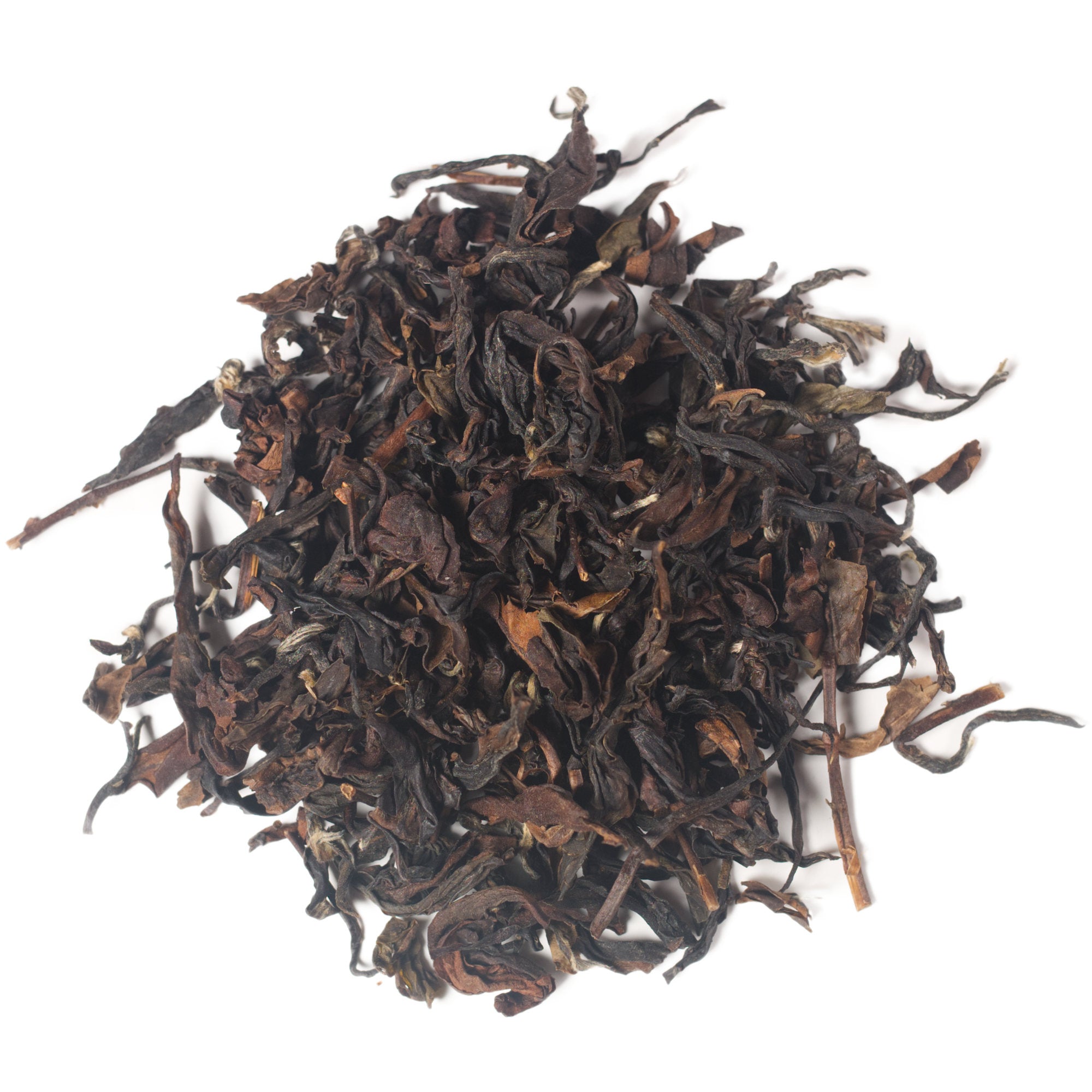
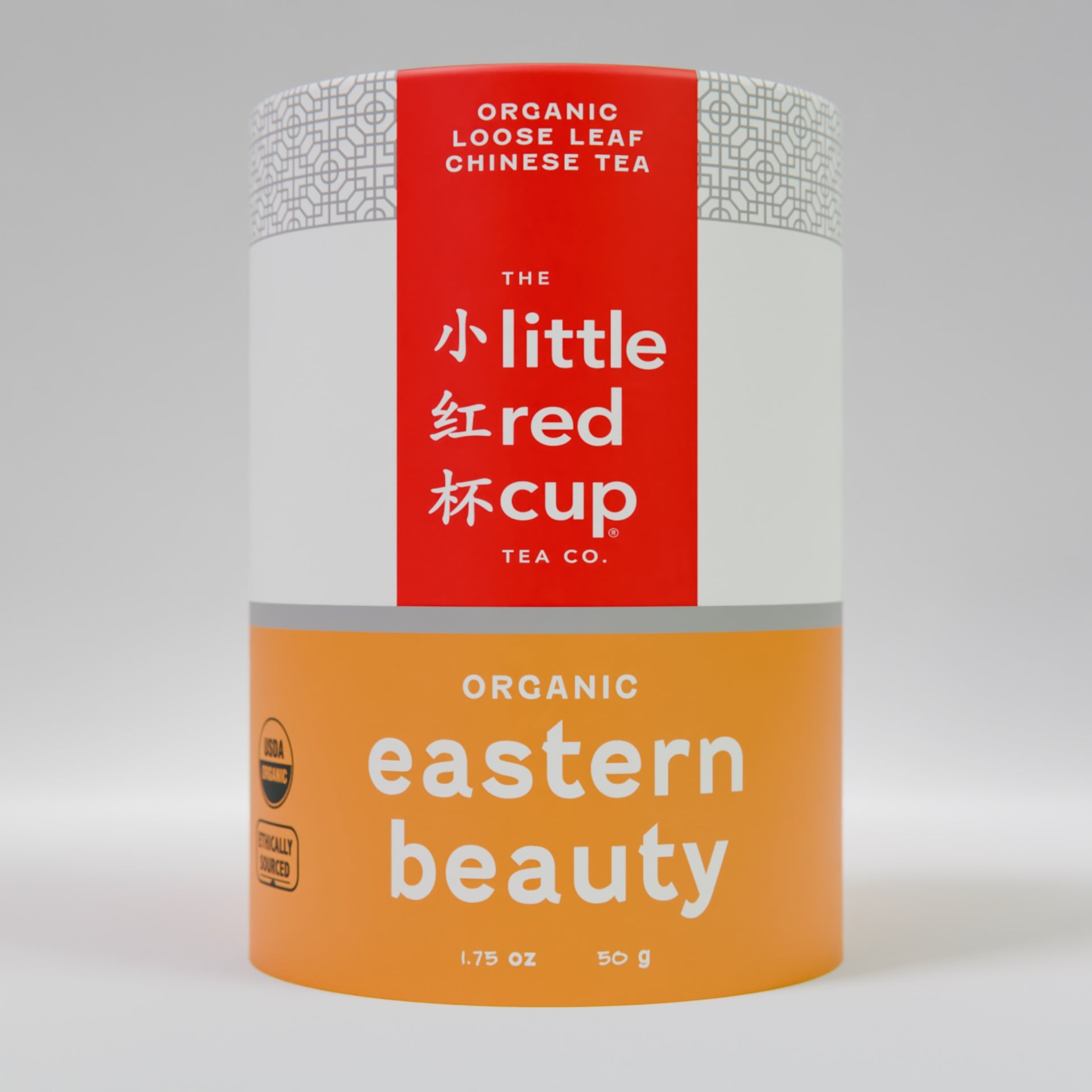
Eastern Beauty (also written Oriental Beauty, or Bai Hao Oolong) has one of the stranger origin stories in tea: the sweetness is partly the work of insects. Leafhoppers bite the leaves, the plant responds by producing aromatic compounds (terpenes) as a defense mechanism, and those terpenes contribute the characteristic honey-like sweetness that distinguishes Eastern Beauty from other oolongs. The best lots are from plants that have been bitten.
The modern prestige center for Eastern Beauty is Taiwan — specifically the Hsinchu region, where it became famous in the late 19th and early 20th centuries. Our lot is from Fujian, the older historical home where the style developed before moving to Taiwan with the Dodd & Co. export trade. The character is the same: amber brew, velvety mouthfeel, autumnal flavors.
How to think about the flavor: as Mike puts it, "hints (really, just hints) of cardamom, allspice, oak, and honey." Mark described it as exactly that: "honey, allspice and the hint of oak — truly a sipping tea." Not assertive flavors; these are background notes in a cup that's primarily smooth, sweet, and warm.
This is a tea for taking your time. Not a morning workhorse. Fred pairs it with food, "drinking a cup with Christmas dinner", but also drinks it alone when he wants to unwind with a book. Nancy reaches for it "for those moments during the holidays when you need a leisurely few minutes."
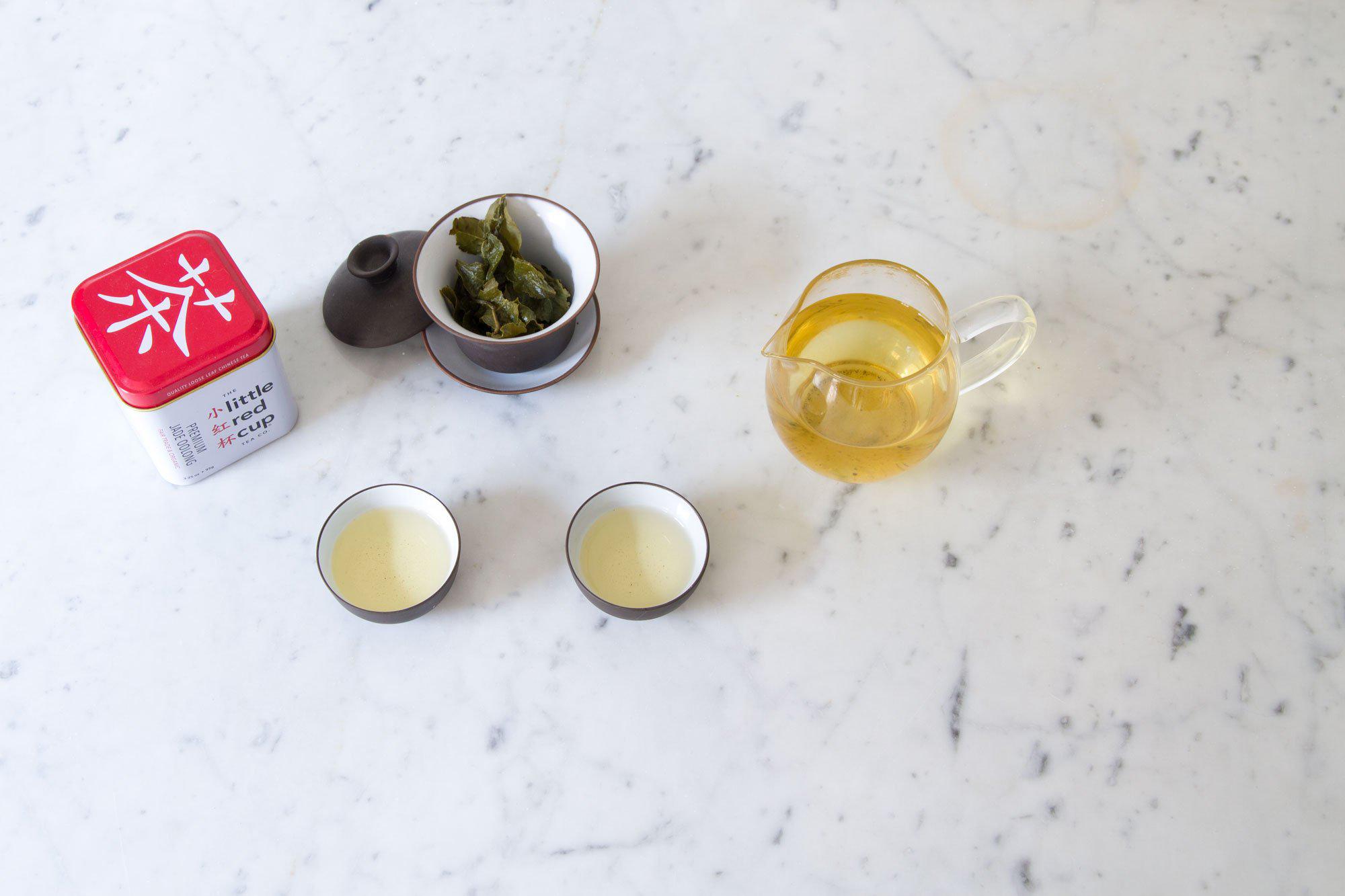
Brewing: 205°F water, 3 minutes 30 seconds, 3 teaspoons (2.5g) per 8 oz cup. Small pot or gaiwan recommended. Drew confirms it "maintains its character through multiple steeps in gong fu brewing."
Sourcing: Fujian Province, China. USDA Organic. Special Lot. (Eastern Beauty's modern prestige center is Taiwan/Hsinchu; this is a Fujian-sourced lot in the same tradition.)
What does Eastern Beauty taste like?
Autumnal and velvety — amber brew with subtle hints of cardamom, allspice, oak, and honey. Rich without being heavy, sweet without being cloying. Less mineral than a rock oolong, more complex than most lighter oolongs. Mark: "honey, allspice and the hint of oak — truly a sipping tea, to enjoy."
What are terpenes, and why does insect predation make this tea sweeter?
When leafhoppers bite the tea leaves, the plant responds by releasing aromatic compounds called terpenes as a natural defense. These same terpenes are part of what gives Eastern Beauty its characteristic sweetness and honey notes — a flavor development that wouldn't happen without the insects. This is why the best Eastern Beauty lots come from plants that have been bitten: the insect interaction is feature, not flaw.
Is this a Taiwanese or a Chinese oolong?
Eastern Beauty's modern fame is centered on Taiwan, particularly the Hsinchu region, where it was developed and exported in the late 19th century by Dodd & Co. Our lot is from Fujian, the older historical home where the style originated before its transplant to Taiwan. The character is the same; the sourcing is Chinese.
How is this different from Da Hong Pao?
Mike's in-house shorthand: "DHP Light." Da Hong Pao is a charcoal-roasted rock oolong — dark, mineral, roasted, assertive. Eastern Beauty is darker than the light oolongs (Bao Zhong, Jade), but has none of the rock tea mineral backbone. More approachable, more floral and autumnal. If Da Hong Pao is the whisky, this is the amber wine.
How much caffeine?
Around 40–50mg per 8 oz cup — standard for a darker oolong. More than a light oolong; comparable to a regular black tea.