Yunnan Province sits in China's southwest — bordering Myanmar, Laos, and Vietnam — at elevations between 1,000 and 2,000 meters. It's the oldest tea-growing region in the world, home to Pu'er, home to ancient tea trees still standing after centuries. But Yunnan black tea — Dianhong specifically — is a recent invention. Large-scale production didn't begin until 1938, when a tea scientist named Feng Shaoqiu was sent west during the Second Sino-Japanese War to see if the big-leaf trees of Fengqing County could be processed as black tea. They could. The first commercial export reached London in 1939 and reportedly fetched 800 pennies per pound. The tea earned its name, Dianhong, the following year.
What makes it taste the way it does is the plant. Most Chinese black teas use the smaller Camellia sinensis var. sinensis leaf. Yunnan black uses Da Ye — the big leaf — genetically native to Yunnan, higher in polyphenols, processed whole-leaf in the Chinese style. The result is fuller-bodied than a Wuyuan Black or Keemun, with dried fruit, a slight maltiness, and a natural sweetness that doesn't need any help. No astringency in a well-made version.
Brewing: 210°F water, 3 minutes, 1.5 tsp (2g) per 8 oz cup. Do a quick 30-second rinse before the first steep to open the leaves — it's worth it. Then steep again. And again. Three or four infusions are normal; the later steeps get softer and sometimes sweeter. Works as a western-style pot or a travel mug. Cold-steeps overnight in the fridge without complaint.
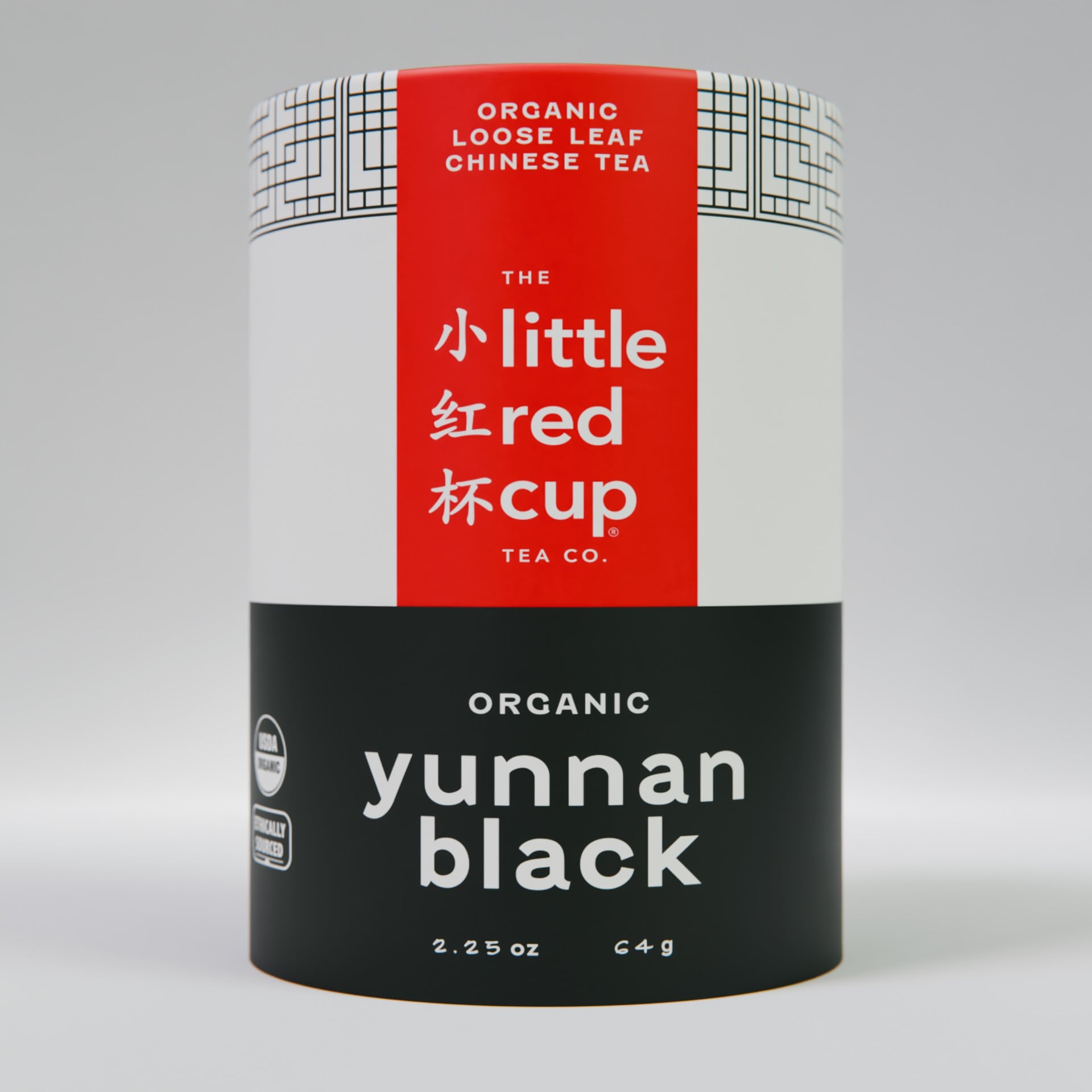
Sourcing: Certified USDA Organic, sourced directly from a worker-owned cooperative in Yunnan Province. No Fair Trade language in our copy because our sourcing story is told through the relationship — 30+ years going to China, working directly with farmers' co-ops, not a certification stamp.
FAQ
What does Yunnan Black taste like?
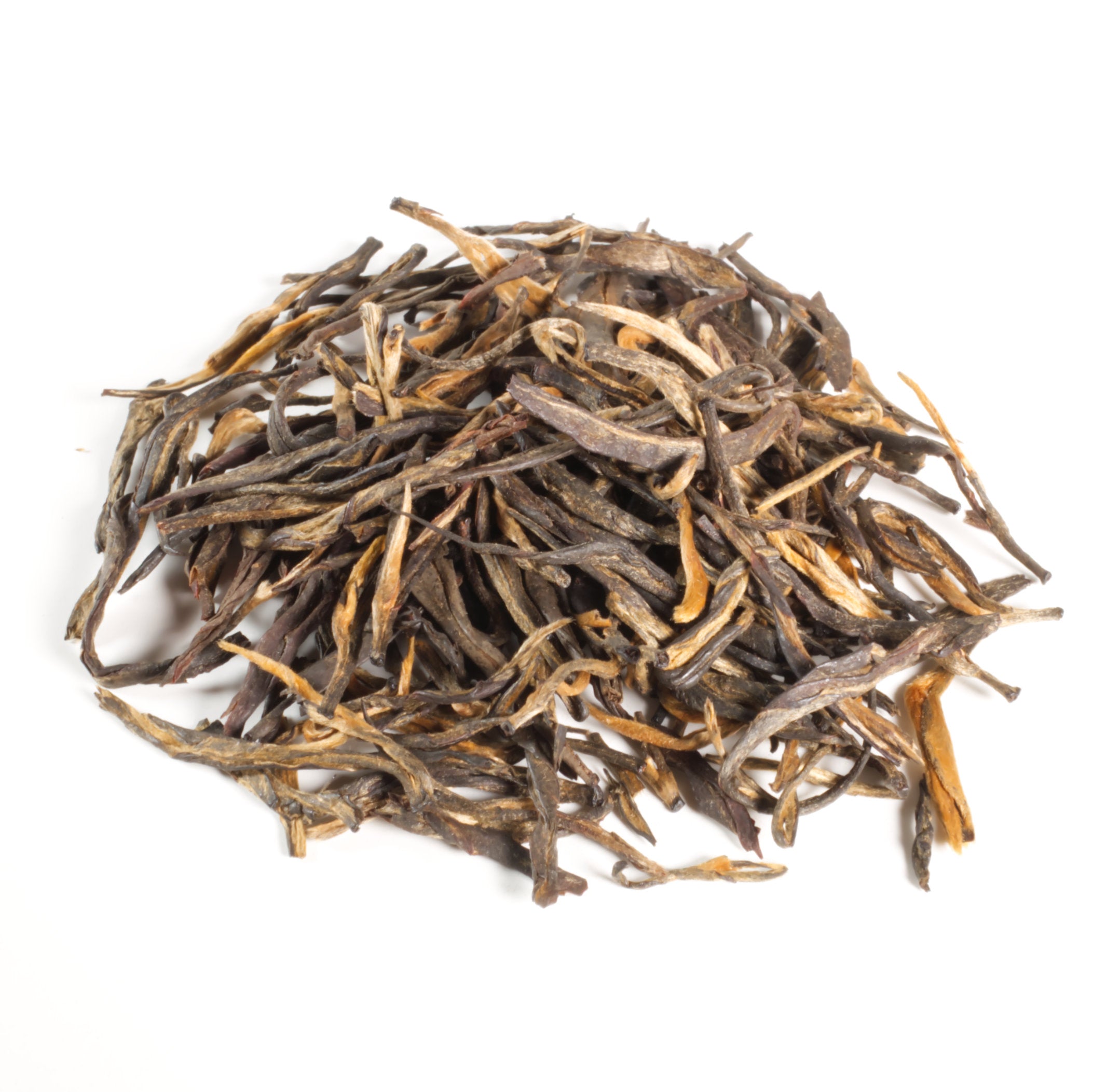
Amber-colored with notes of dried fruit, honey, and a light maltiness. Fuller-bodied than most Chinese black teas but without bitterness or astringency. There's a natural sweetness that shows up without anything added — that's the golden-tip bud material doing its job.
Is Yunnan Black good for everyday drinking?
It's what Rachel drinks every morning. It's forgiving to steep, substantial enough to replace coffee, and interesting enough that you don't get tired of it. The fact that it resteeped three or four times also means a tin lasts longer than you'd expect.
Can I drink this instead of coffee?
Yes, and a number of customers do. It's more body-forward than other Chinese black teas — closer in presence to coffee than a delicate Wuyuan Black — without the spike-and-crash of caffeine from a large cup of coffee. David put it plainly: "I am replacing my coffee with Yunnan Black."
How much caffeine is in Yunnan Black?
Roughly 50mg per 8 oz cup, which is on the higher end for tea — about half what you'd get from a standard cup of coffee. Because you can resteep the leaves, the caffeine drops with each infusion, so later cups are lighter.
What's the difference between Yunnan Black and Golden Monkey?
Both come from Yunnan's Da Ye big-leaf cultivar. Golden Monkey is made almost entirely from buds — sweeter, lighter, more explicitly fruity. Yunnan Black has those golden tips mixed into full leaves, which gives it more body and earthiness alongside the sweetness. Related teas, different weight classes.
Is this the same as Dianhong?
Yes. Dianhong is the Chinese name: "Dian" for Yunnan Province, "hong" for red (which is what the Chinese call black tea). Yunnan black, Dianhong, Yunnan red — same tea.