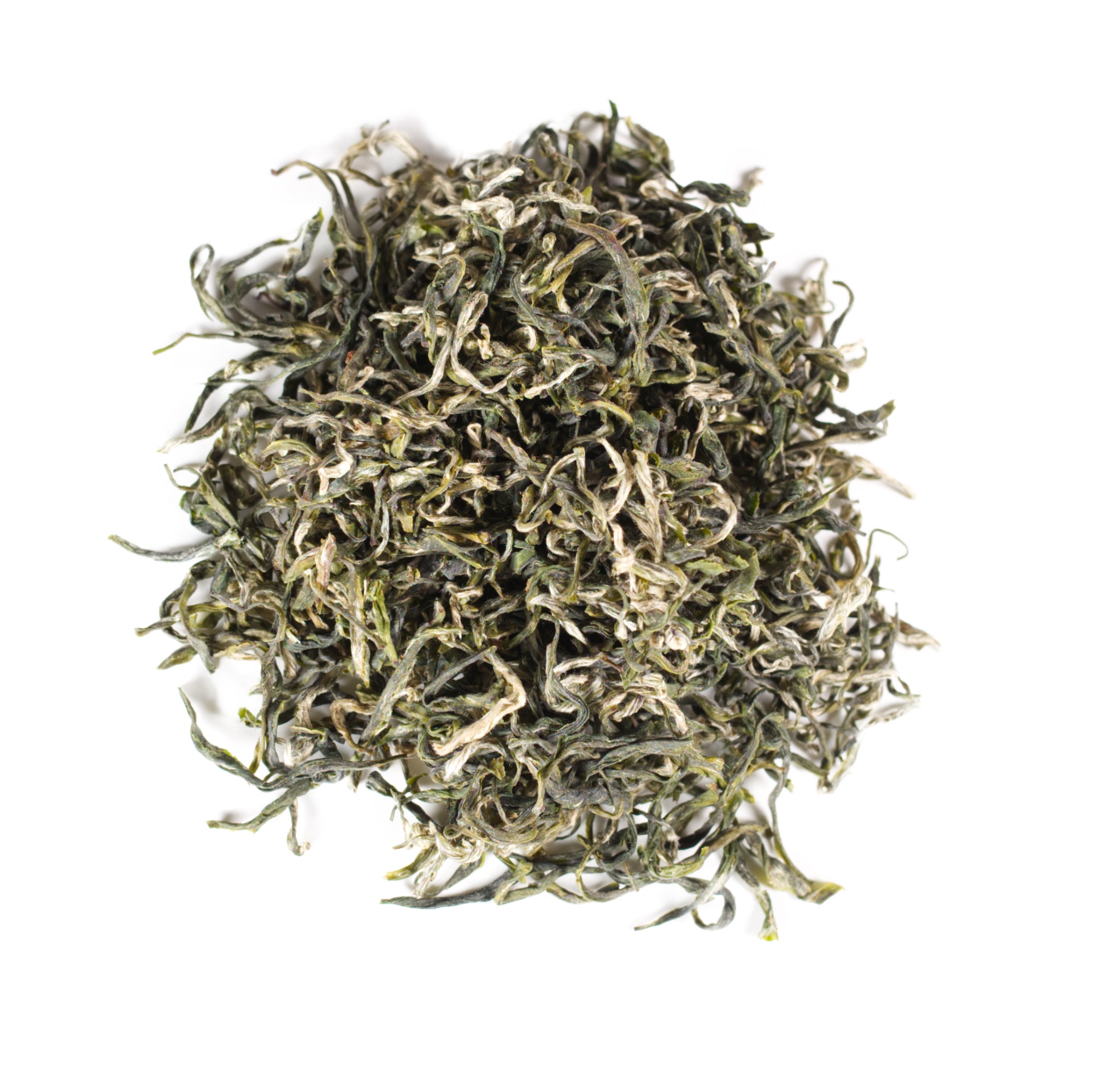
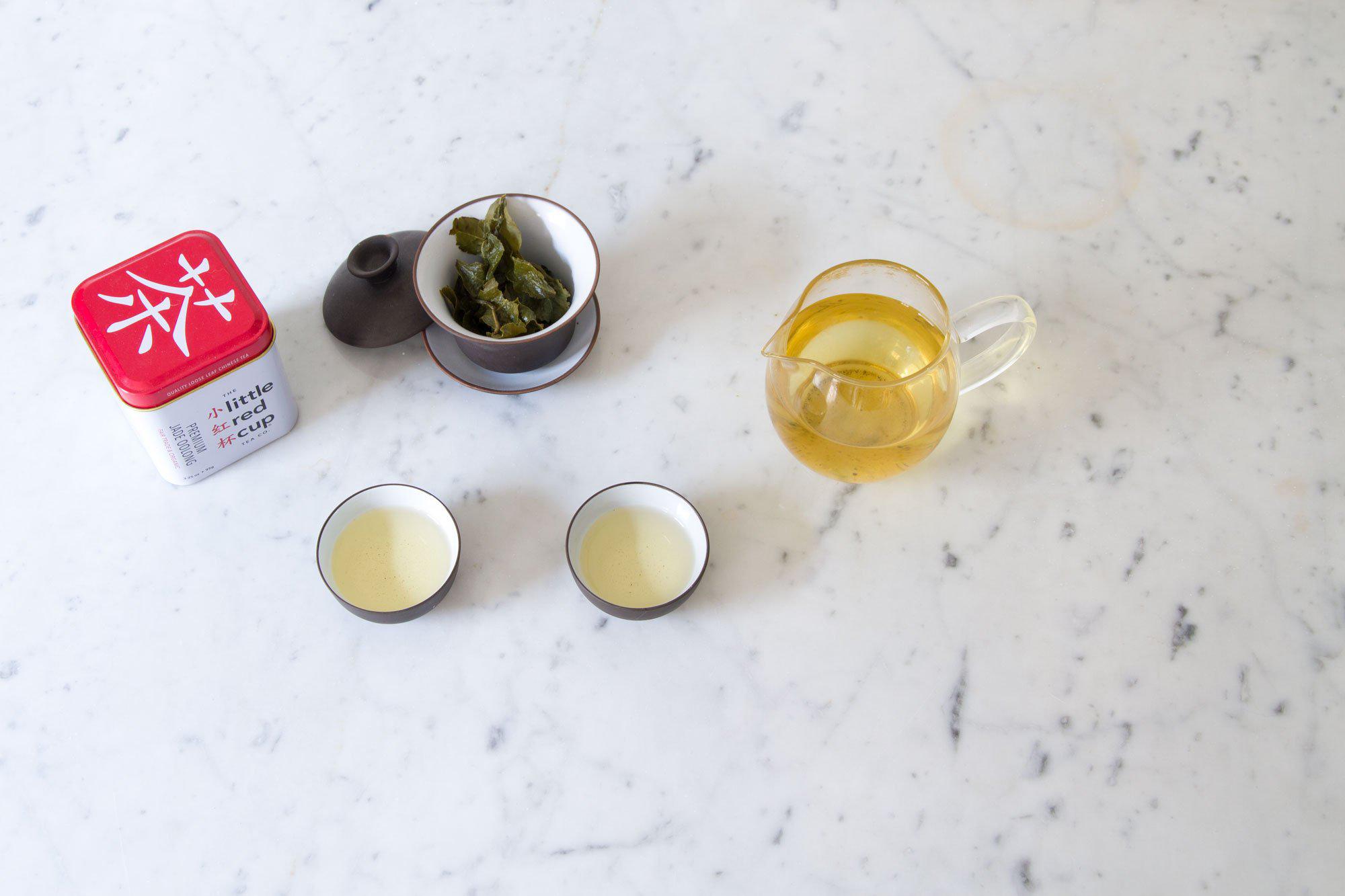
The naming story is one of the best in tea. The tea's original name, Xia Sha Ren Xiang (嚇煞人香), means roughly "a fragrance so intense it's frightening." Emperor Kangxi encountered it during a trip to Lake Tai in Suzhou and found that name unsuitable for tribute purposes. He renamed it Bi Luo Chun (碧螺春): "Green Snail Spring," a reference to the characteristic snail-spiral shape of the hand-rolled leaves and the early spring harvest. One of China's Ten Famous Teas, by official designation.
The original home is Dongting Mountain in Suzhou, Jiangsu Province, where the traditional growing method interplants tea with fruit trees (peach, apricot, plum), and the theory is that the fruit aromas influence the tea's floral, buttery character. Our lot is Suzhou-style from Hunan, where our partners produce the same snail-spiral rolled leaves, the same jade-colored brew, the same fragrant, buttery character that gave it the frightening-fragrance reputation in the first place.
What it tastes like: Richard, who describes himself as not much of a green tea drinker, found it "smooth, lacking that grassy taste I find in so many green teas" — he might be a convert. Donna called it "phenomenal! So complex and satisfying." Justin: "One of the finest and most refined teas — one of the greatest greens of China, and that's saying something."
One practical note: this tea requires a generous hand. Michele's advice: 3 teaspoons for a 6-oz cup, 5-6 for a mug. It brews multiple sessions.
Brewing: 190°F water, 3 minutes, 3 teaspoons (2.5g) per 8 oz cup. Good for multiple infusions.
Sourcing: Hunan Province, China (Suzhou-style processing). USDA Organic. Special Lot.
What does Bi Luo Chun taste like?
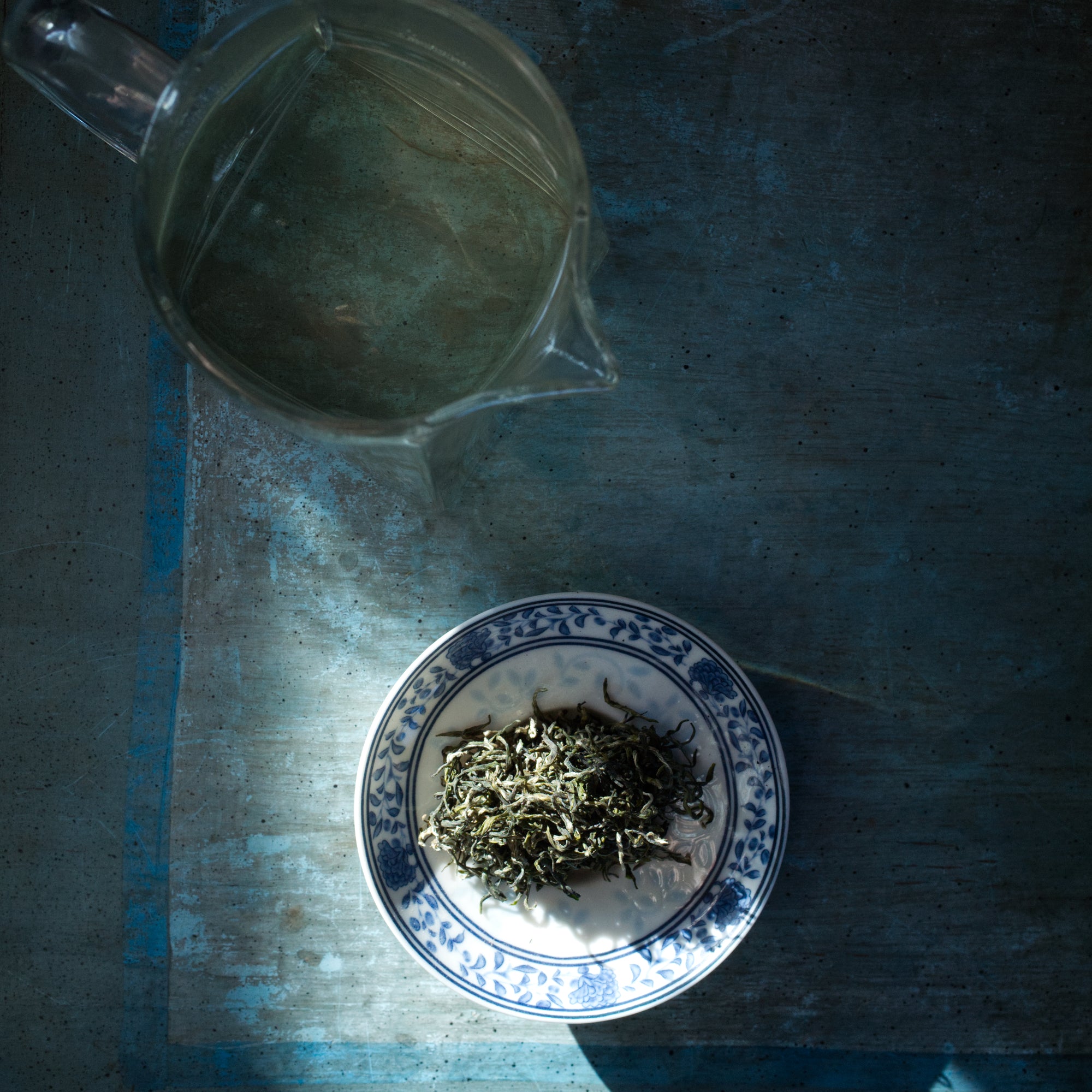
Fragrant, buttery, and complex, with a jade-colored brew that's luminously good. Deep and pleasingly vegetal: not grassy like many green teas, but rich and satisfying. Richard: "Smooth, lacking that grassy taste I find in so many green teas — I might be a convert." Michele: "Rich cup of golden tea with a bit of honey sweetness."
What does "Bi Luo Chun" mean, and why did Emperor Kangxi rename it?
Bi Luo Chun (碧螺春) means "Green Snail Spring." The tea's original name, Xia Sha Ren Xiang, meant "a fragrance so intense it's frightening." Emperor Kangxi encountered the tea during a visit to Lake Tai, loved it, but found the original name unsuitable for tribute. He renamed it after the characteristic snail-spiral shape of the rolled leaves and the early spring harvest.
Is this really from Suzhou?
Our lot is Suzhou-style from our Hunan partners — same rolling tradition, same processing method, same jade-colored brew and buttery fragrance. Traditional Bi Luo Chun is associated with Dongting Mountain in Suzhou, Jiangsu Province, where tea has historically been grown among fruit trees. As Mike puts it: "a true Suzhou style green tea... from our fabulous partners in Hunan."
How much tea do I use per cup?
More than most teas. 3 teaspoons (2.5g) for a standard 8 oz cup — Michele notes 5-6 teaspoons for a full mug. This uses more leaf than typical, so factor that in when buying. The re-steeping potential means you're getting multiple cups from that same quantity.
How much caffeine does Bi Luo Chun have?
Around 25–30mg per 8 oz cup — standard for a Chinese green tea. Karen drank it in the afternoon for an energy boost; Thomas brews it every morning. Flexible for time of day.