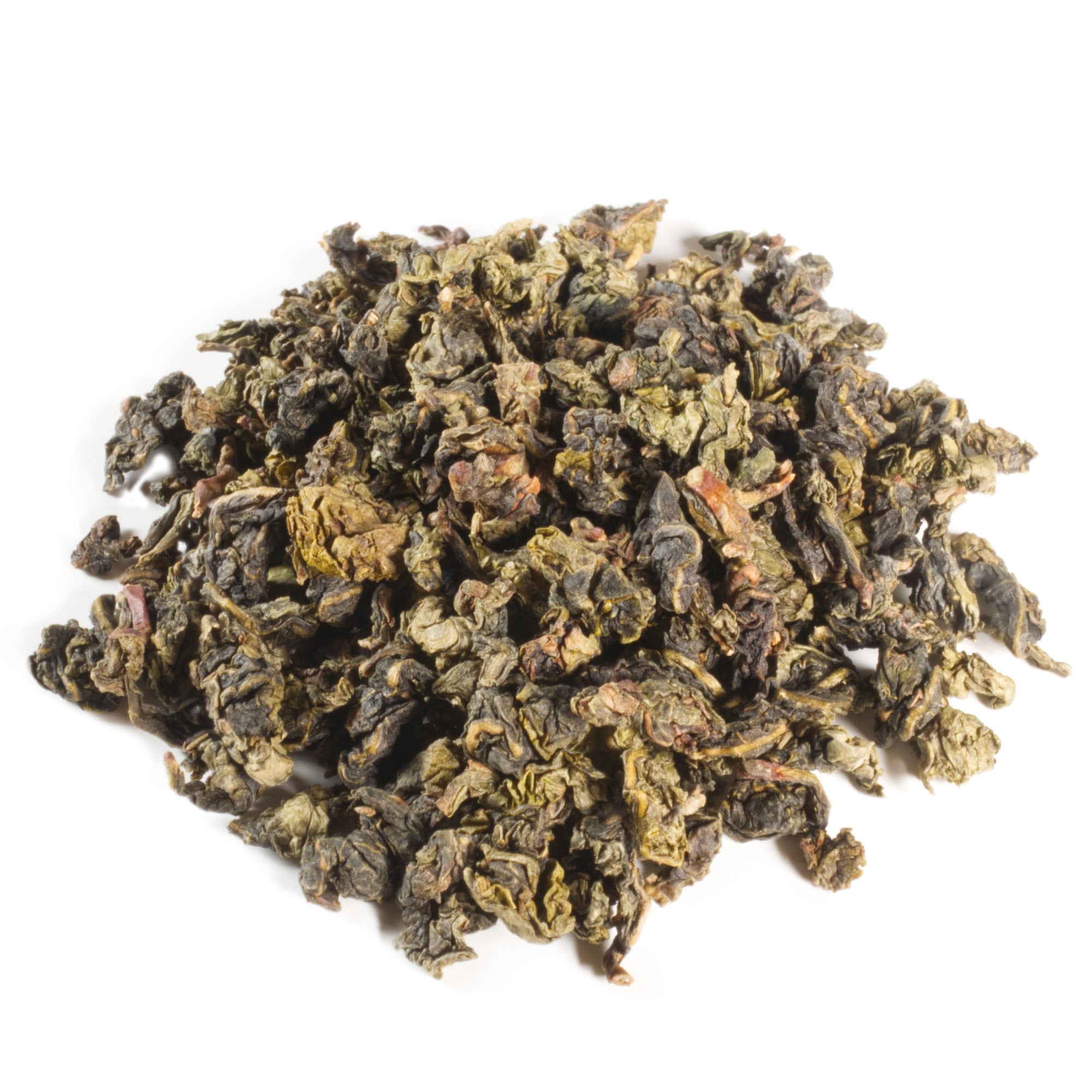
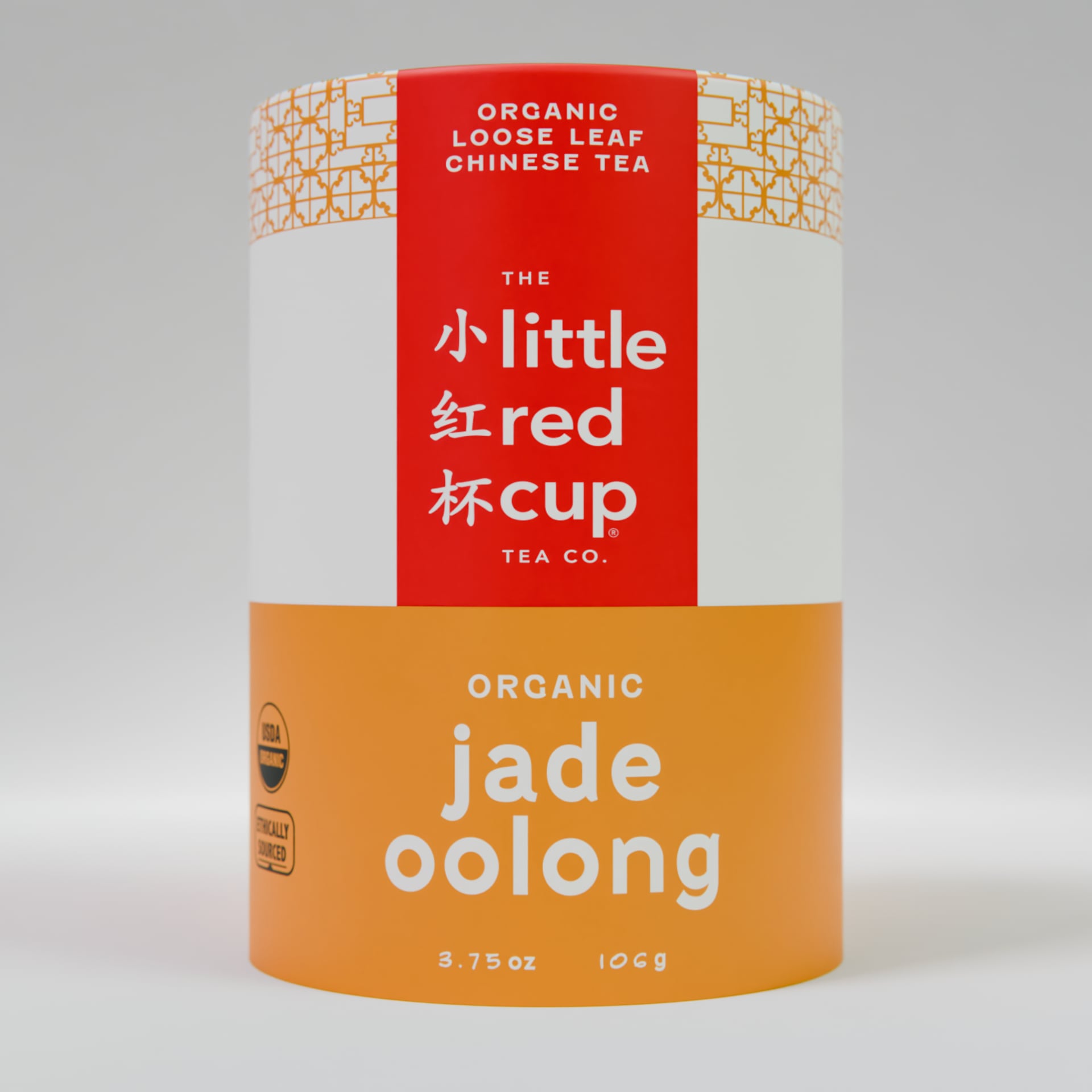
Oolong is a wide category. On one end you have dark, roasted rock oolongs — mineral-heavy, almost coffee-like in depth. On the other end, green-style oolongs: lightly oxidized, floral, bright. Jade Oolong is firmly on the lighter end of that spectrum.
"Jade" isn't a protected designation for one specific tea; it's a style name that signals a greener, less-roasted character. Think of it as sitting closer to green tea than to a Da Hong Pao — same family, completely different cup. The distinguishing step is restraint: the leaves are bruised at the edges to start oxidation, then fixed quickly before it travels far. What you get is a tea that holds some of the freshness of a good green while adding the floral complexity and body that only oolong delivers.
Our Jade Oolong comes from the mountains of Hubei Province. Classic Tieguanyin-style oolongs are associated with Anxi County in Fujian — the coastal province famous for greener oolongs. Our tea takes the same style from a different mountain. We spent years looking before we found this one; it was the first oolong we were willing to sell. Hubei's altitude and growing conditions produce a leaf that's noticeably floral and clean, with a sweetness that doesn't need any help.
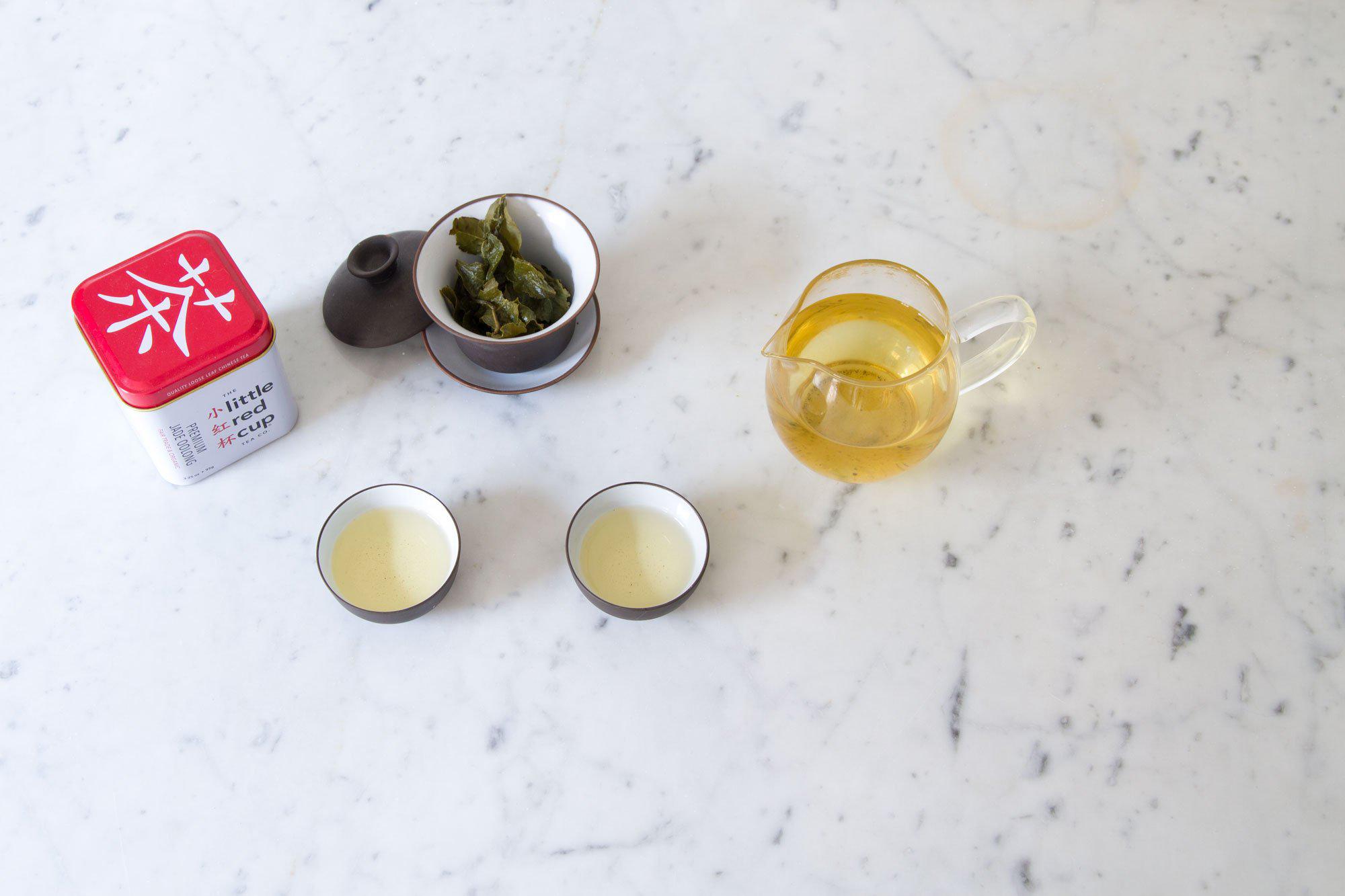
Brewing: 210°F, 4 minutes, 1.5 teaspoons (3g) per 8 oz cup. Pour off the first short steep as a rinse — this opens the leaves and mellows any initial edge. After that, you'll get three or four solid infusions. Adjust the leaf amount to taste: lighter is more floral, heavier brings out more body. The tea is forgiving; a few extra minutes in the pot won't make it bitter.
Certifications: USDA Organic, MOFGA Organic. No synthetic pesticides or herbicides. Grown by a worker-owned cooperative we source with directly.
What does Jade Oolong taste like?
Floral, mellow, and naturally sweet — light citrus, a hint of toasted grass, a clean finish. The liquor brews green-gold. It's less roasted than a Da Hong Pao, less grassy than a green tea; most people find it approachable from the first cup. Recurring descriptions from customers: floral, smooth, buttery, subtly sweet.
Is this a Tieguanyin (Tie Guan Yin)?
It's made in the same greener-oolong style, but it isn't a Tieguanyin. Classic Tieguanyin comes from Anxi County, Fujian. Our Jade Oolong comes from Hubei Province — different mountain, same light-oxidation approach. We call it Jade Oolong because that's what it is: a house expression of greener-style oolong that stands on its own.
Is Jade Oolong a good everyday tea?
That's exactly what it's sourced for. Kevin called it "priced for a perfect daily drinker, but so much more than that — as good or better than oolongs costing twice as much." It's forgiving enough to brew at a desk and light enough to drink all day without getting heavy.
How much caffeine is in Jade Oolong?
Roughly 40–50mg per 8 oz cup — similar to other oolongs, about a third to half of a typical coffee. Combined with L-theanine (naturally present in all tea), the energy is sustained and calm rather than a spike.
Can I steep the leaves more than once?
Three or four good infusions is standard. Pour off the first short steep as a rinse, then brew 4 minutes, then 5–6 for subsequent steeps. Each infusion shifts slightly — a little more body, a little less brightness. Kin gets five rounds out of it regularly.
I normally drink green tea — will I like this?
Probably yes. Christina put it directly: "I normally don't like oolongs, but this oolong is superb. I am a serious green tea drinker and I drink this tea every day." The light oxidation means the gap between a good green and this tea is smaller than you'd expect.