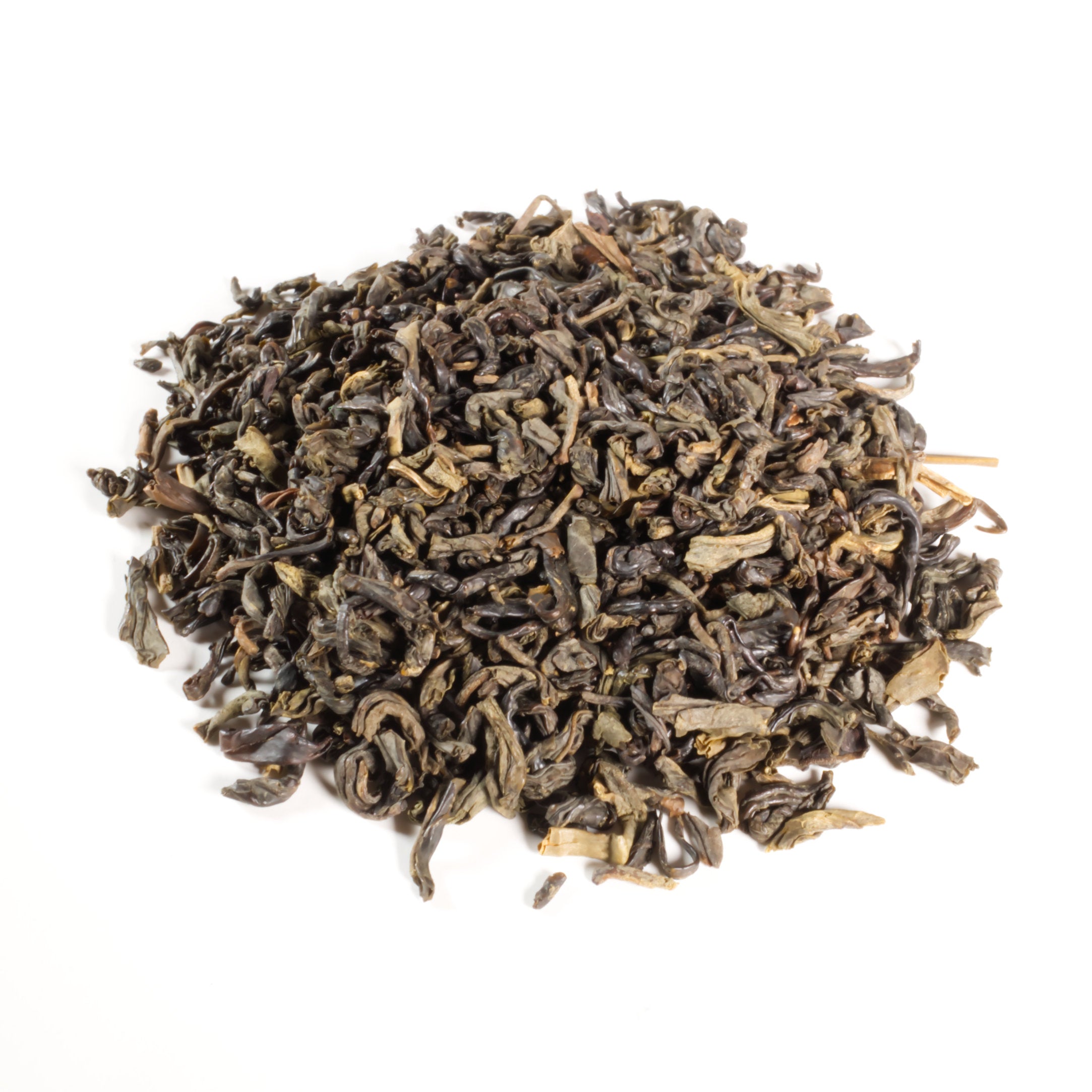
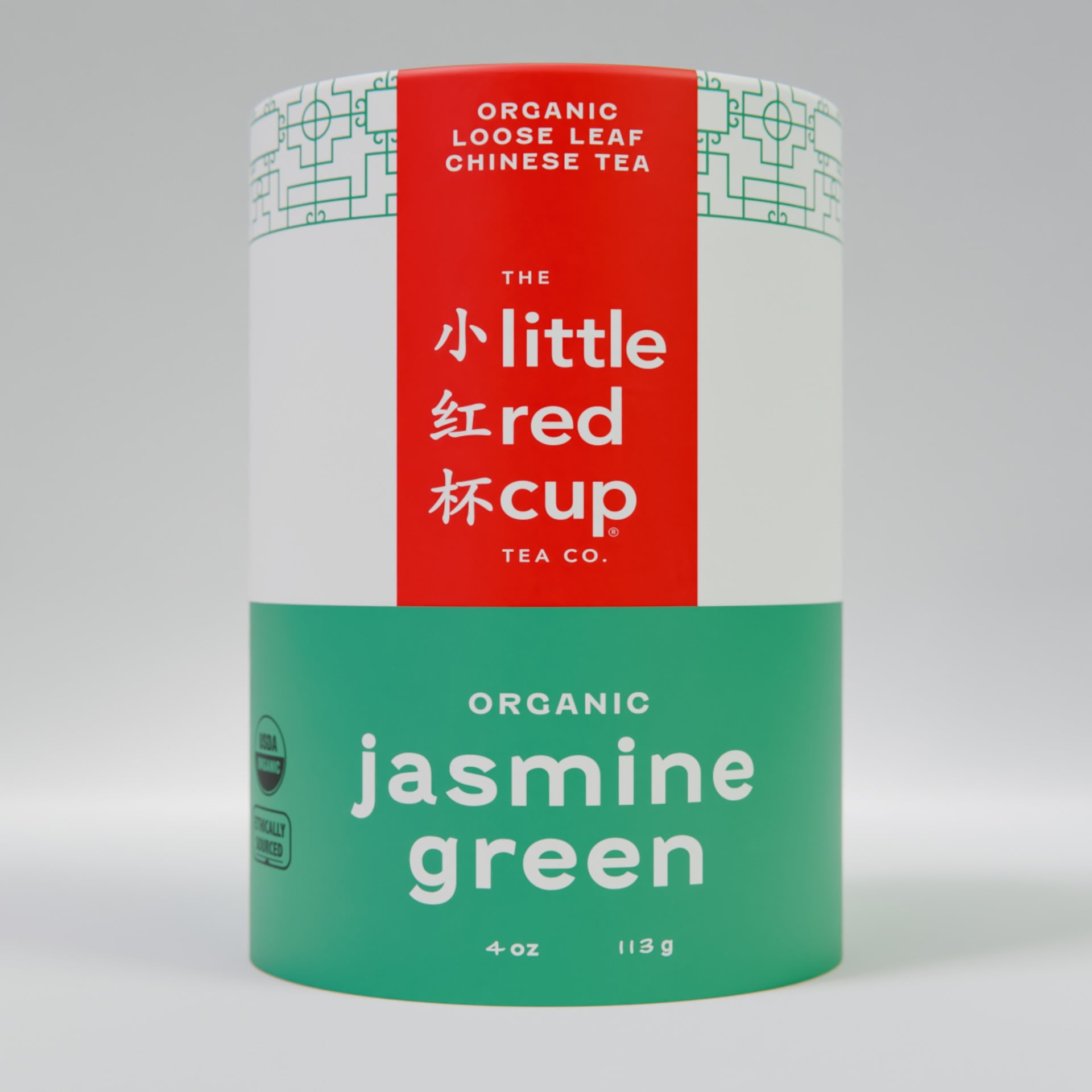
Jasmine green tea has been made for at least 800 years. In northern China — Beijing especially — it's the default: the tea in every neighborhood shop, the one poured when guests arrive, the cup that doesn't require explanation. Its longevity isn't mystery; it's reliability. Jasmine sits well with almost everyone, brews forgiving, and ages into a daily ritual faster than any other tea in the collection.
How it's made — and why it matters
The difference between good jasmine tea and the rest comes down to one thing: scented versus flavored. Cheap jasmine tea is made with jasmine extract or synthetic oil sprayed on low-grade leaves. You can taste it: the floral note is aggressive upfront, doesn't change as the tea steeps, and vanishes fast. Scented jasmine tea is made differently. Fresh jasmine flowers — picked in early morning, kept cool through the day — are layered near the tea leaves as evening temperatures drop and the buds open. The leaves absorb the jasmine fragrance overnight. Then the flowers are separated out, the tea re-dried, and the process repeats. For higher grades, multiple rounds of fresh flowers build the character in without adding anything artificial. The occasional petal in your tin is evidence: the flowers were real and they were there.
Our Jasmine Green uses a pan-fired green tea base from Wuyuan County in Jiangxi Province, a region with over a century of jasmine tea production history — including medals at the 1915 Panama-Pacific International Exposition for jasmine-scented Wuyuan teas. The green tea and jasmine flowers are both grown organically by the same farmers through a worker-owned cooperative. No synthetic scenting, no shortcuts.
Brewing
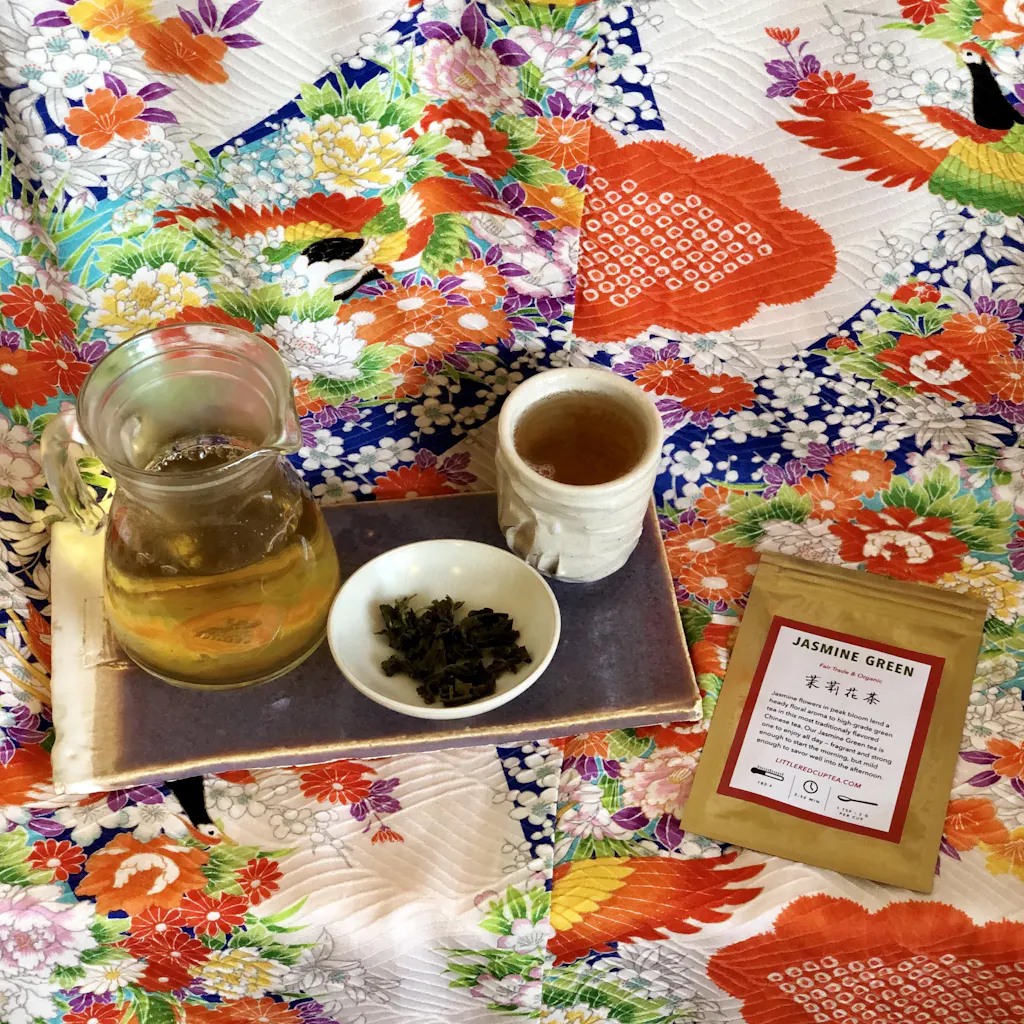
Water at 180°F. Steep 2 minutes 30 seconds. About 1 tsp (1.75g) per 8 oz cup. Start with a tablespoon in a small glass teapot; after a second steep, add a bit more tea with the third helping of hot water. The leaves will resteep well — most people get three or four good cups from the same leaves. For iced tea: cold-brew in cold water for 8–12 hours. The jasmine comes through clearly with no bitterness.
Both tea and jasmine flowers are USDA Organic certified. Sourced directly through a worker-owned cooperative in Jiangxi.
FAQ
What does Jasmine Green Tea taste like?
The jasmine fragrance is the entry point — prominent but not synthetic or soapy. The green tea underneath is smooth, slightly sweet, clean. "Well balanced, not overly floral," wrote Matthew. The finish is light and uplifting rather than heavy or perfumed. Hot or iced, the character holds.
Is this a good everyday tea?
It's our best-selling tea. Customers describe morning pots, afternoon cold brew batches, late-afternoon cups at the office. "I drink it around 2x a day now," wrote Veronica. The flavor is consistent across steeps and it doesn't require any particular care to brew well.
How much caffeine does Jasmine Green Tea have?
Roughly 25–30mg per 8 oz cup — in line with green tea generally, and well below oolong or black tea. About a third of a typical cup of coffee. Calm, sustained energy; no jitters. Safe and sensible for all-day drinking.
Can I steep the leaves more than once?
Yes. Most people get three or four good steeps. Add a minute or so to the steep time with each subsequent infusion. The second steep is often when the balance between the green tea base and jasmine scent is most even.
What's the difference between Jasmine Green and Jasmine Silver Needle?
Same scenting method. Different base. Jasmine Green uses a pan-fired green tea base — brighter, more structured, more assertive. Jasmine Silver Needle uses a white tea base (bud-only grade), which produces a lighter, more delicate cup. If standard jasmine feels too intense to you, Silver Needle is worth trying. If you want the classic northern Chinese everyday jasmine, this is it.
Why does organic matter especially for jasmine tea?
Jasmine flowers used in scenting aren't dried — they're fresh, and they're in direct extended contact with the tea leaves during scenting. Whatever's on the flowers goes into the tea. Non-organic jasmine frequently carries pesticide residues that end up in the finished cup. Organic certification here is relevant to what's actually in your drink, not just an abstract farming standard.