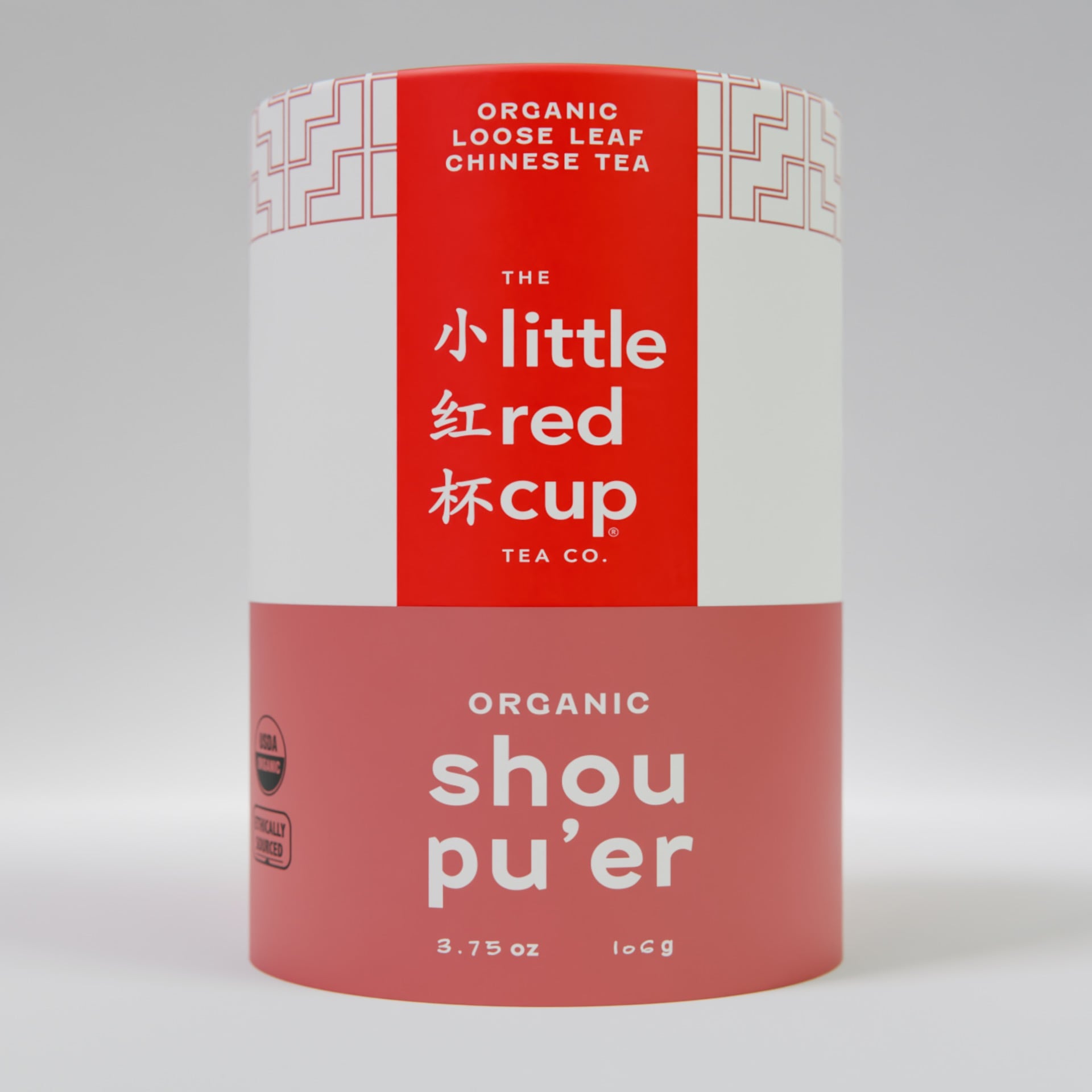
Pu'er is the only tea category defined not by what happens to the leaf during processing, but by what happens after: microbial fermentation. There are two kinds. Sheng (raw) pu'er is aged slowly — sometimes for decades — and commands collector prices. Shou (ripe) pu'er was developed in the 1970s as the everyday answer: a controlled piling and fermentation process called wo dui shortens that timeline from decades to weeks, yielding the same dark, mellow depth without the wait. It's what most people encounter first, and it's what we carry.
Our Shou comes from members of the Wa minority in Lincang, Yunnan — a region so central to the history of tea cultivation that Lincang is considered one of the oldest growing areas on the planet. The Wa community has been farming this land for generations. We source directly from their worker-owned cooperative, no intermediaries.
Brewing. Use boiling or near-boiling water — 210°F. Two teaspoons (about 4g) per 8 oz cup, steep four minutes. An optional 10-second rinse before the first steep opens the leaves and mellows any warehouse notes. Then steep it again: three infusions is normal, with the earthiness softening and the sweeter, vanilla notes coming forward as you go.
Shou is forgiving. If you forget it in the pot, it won't punish you. Debora steeps it long and reports "no bitterness no matter how long you let it steep." That's not an accident — the fermentation process reduces the tannins responsible for bitterness in other teas.
USDA certified organic. Sourced directly from a worker-owned cooperative in Lincang.
FAQ
What does Shou Pu'er taste like?
Dark, earthy, and smooth — closer to forest floor after rain or a cool wine cellar than anything muddy. Our lot brews silky with hints of vanilla and sometimes dark chocolate undertones. It holds up well to strong steeping without turning bitter.
Is the earthiness off-putting?
It's the number one question, and the answer is: not in a well-made Shou. Earthiness in pu'er is clean and grounding, not damp or musty. Most people who try it expecting something unpleasant are surprised. If you're genuinely unsure, start with the sample before committing to a tin.
How much caffeine is in Shou Pu'er?
Roughly 40–50mg per 8 oz cup — in the same range as other dark teas, about half a cup of coffee. Nadege's note: "the caffeine effects last a while but never give you the jitters." That sustained, calm energy is what draws a lot of coffee drinkers to this tea.
Can I steep the leaves more than once?
Yes — three infusions is typical, sometimes four. Add about a minute to the steep time with each round. The earthiness softens and sweeter notes come forward in later steeps.
Is Shou Pu'er the same as aged pu'er?
No. Aged (sheng) pu'er is raw tea that's slow-fermented over years or decades. Shou pu'er goes through an accelerated wet-pile process (wo dui) that produces similar depth much faster. For everyday drinking, Shou is the right starting point — and you don't need to wait a decade for a good cup.
Does this work as a coffee replacement?
It's one of the more common reasons people land here. Shou Pu'er has the presence and depth coffee drinkers are used to — dark color, full body, no acidity — without the jitter-and-crash pattern. It also takes milk or coconut milk if that's your habit, though it's excellent straight.